Anti-Atheist Prejudice (Part 5): What We Know So Far

[Published a day early because I will be very busy tomorrow]

Anti-Atheist prejudice is an under-studied phenomenon, seemingly viewed by academics as systemic but not important or, by lay people, as irrelevant. Whatever the case may be prejudice against atheists is an important phenomenon to study because it gives us insight into the cultural psychology of modern society. Why do self-described “open minded” people have difficulty accepting non-religious people for public office, for example? Common sense would have us believe a society that (relatively speaking) accepts religious diversity should also accept non-religion as a legitimate alternative. This is not the case, however, and atheism remains one of the final taboos in the US society.

Over the last several weeks I’ve been combing through some of the literature about anti-atheist prejudice. First, one study suggested the disparity between the electability to public office of religious people and atheists rests on the assumption that atheists are distrustful, disgusting, and threatening. Second, another study found a negative correlation between atheist prevalence in a society and the level of prejudice against atheists. The study also found that as the atheist prevalence increases, distrust decreases. In other words, simply reminding people that atheists are prevalent helps to overcome the findings in the first study in this series. Third, the next study offers several surprisingly easy steps we can take to help increase trust of atheists. Finally, the fourth study suggests that the presumptions about the positive effects religion and spirituality has on psychological health often has detrimental consequences. This final study is beyond the scope of this post, and I won’t be discussing it.

As we’ve noted, distrust appears to be the recurring theme in anti-atheist prejudice research. All three studies (addressed in this post) find that the public simply has a difficult time trusting atheists. Additionally, previously I reviewed another study that made similar conclusions: Distrust of atheists can be mitigated by reminding people the police exist. These studies help close major gaps in our knowledge about anti-atheist prejudice, but, as we all know, correlation does not equal causation. Therefore, more research is needed.

But research is not the goal of this project. Instead, we will continue looking to the literature and trying to put this puzzle together. And upon doing so something glaring stands out. People generally distrust atheists, but they can’t seem to agree on why atheists are distrustful.

Contradictory Narratives

In “Atheists As “Other”: Moral Boundaries and Cultural Membership in American Society,” American Sociological Review, April 2006 vol. 71 no. 2 211-234, researchers conducted a rather large multivariate analysis using survey data and followed it up with personal interviews to help give us insight into Americans’ views on non-religion. The article itself is rather in-depth. For the purpose of this post, I’ll be looking only at post-survey interviews.

Of particular note, interviewees could not agree on why atheists were distrustful. Some viewed atheists as criminals and degenerates who undermine society from the bottom classes. Others viewed atheists as elitists and materialists whose greed and self-importance erodes society from the upper echelons. The researchers put it thusly (pp. 225-7):

Respondents had various interpretations of what atheists are like and what that label means. Those whom we interviewed view atheists in two different ways. Some people view atheists as problematic because they associate them with illegality, such as drug use and prostitution — that is, with immoral people who threaten respectable community from the lower end of the status hierarchy. Others saw atheists as rampant materialists and cultural elitists that threaten common values from above — the ostentatiously wealthy who make a lifestyle out of consumption or the cultural elites who think they know better than everyone else. Both of those themes rests on a view of atheists as self-interested individualists who are not concerned with the common good.

Two things stand out here. First, these narratives are disparate. And second, despite this discrepancy, these narratives meet at a common theme: self-interest. In other words, both of these groups agree that atheists are self-interested people, and that is the major problem. On the other hand, however, neither group agrees on why. This contradiction undermines the strength of their claim. How do they know atheists are self-interested troublemakers if one group views them as drug addicted rapists, and the other views them as over-indulgent and uncaring millionaires? They can’t be both, so who’s to say they’re either? That’s not to say one can’t be right, but in order for one to be correct they’d need to demonstrate how their view is correct. I’ll hypothesize here that that’s a very tall order (because it’s simply not true).

Furthermore, that is a false dichotomy anyway. Our goal is not to get people to demonstrate why atheists are self-interested troublemakers; the goal is to determine the probable causes of people’s views of atheists as self-interested troublemakers and demonstrate that.

But these competing narratives are also part of the scientific question. The authors conclude this section (before changing gears) (p. 228):

In these interviews, the atheist emerges as a culturally powerful “other” in part because the category is multivalent (Turner 1974), loaded with multiple meanings. … To put it somewhat differently, atheists can be symbolically placed at either end of the American status hierarchy. What holds these seemingly contradictory views together is that the problem of the atheist was perceived to be a problem of self-interest, an excessive individualism that undermines trust in the public good. … It is important to note that our respondents did not refer to particular atheists whom they had encountered. Rather they used the atheist as a symbolic figure to represent their fears about those trends in American life — increasing criminality, rampant self-interest, an unaccountable elite — that they believe undermine trust and a common sense of purpose.

In other words, the respondents created an image of the atheist to help them explain their perceptions of criminality, greed, and empathy. The fact that atheists can rest at either end of the social spectrum is merely incidental.

Where Do We Go from Here?

Will M. Gervais has conducted several studies into anti-atheist prejudice, which I’ve covered to some extent in the past. He makes several novel suggestions. For example, simply telling people that X number of atheists live in their society should reduce levels of distrust of atheists. This suggestion fits with some of the findings above. Because the atheist was constructed symbolically to explain certain phenomena, without regard to individual atheists they may have met, reminding people that atheists are prevalent might compel them to rethink their conclusions about atheists. That is, if atheists really are self-interested troublemakers, we should expect the crime and incarceration rates to reflect that population. Furthermore, as more and more closeted atheists publicly declare their non-belief, more people should come to reject this stereotype; “My son’s an atheist, and he’s not a criminal,” a mother might say.

Of course, this is all up to people to do. Science cannot compel people to behave a certain way.

The gaps in our knowledge are still pretty wide, but we’re beginning to see some trends. Prejudice against atheists is based on distrust. Distrust of atheists is based on perceptions of atheists as self-interested, despite a contradiction. The contradiction can be explained by symbolically calling the atheist an “other” who simultaneously rests at both extreme ends of the American social spectrum. These can be mitigated by, for example, informing people about atheist prevalence.
Posted in Science Sundays | Tagged , , , , , | 1 Comment

Anti-Atheist Prejudice (Part 4) (SS#11)

For the last three weeks I have been discussing the academic literature studying anti-atheist prejudice. My goal with this project is to eventually weave this research together into something that more closely resembles a discussion amongst social and psychological scientists. This is precisely the technique used in research: First, review the literature and find gaps in our knowledge, second… etc. In other words, this is the first step someone would take when conducting a major research project. This brings me to my next article and topic of discussion, “Arrantly Absent: Atheism in Psychological Science From 2001 to 2012,” The Counseling Psychologist 2014, Vol. 42(5) 628–663.

In this article Melanie E. Brewster (et al) do a beautiful job weaving previous research together in their introduction, exposing gaps and setting up their premises. They uncover — in their literature review — a monumental shift during the last decades of psychologists studying the benefits of religion on the mind to the exclusion of irreligion, which, they argue, has an implication of religion is good for the mind, atheism is bad. Indeed, the authors cite Kier and Davenport, who state, “such research could be used to support prejudice and discrimination.” And this brings me back to the idea of anti-atheist prejudice. The authors conduct this study because in their field prejudice has empirical consequences (see minority stress theory):

experiences of discrimination and stigma lead to increased psychological distress and physical health problems—a finding supported empirically across many oppressed groups (see Thoits, 2013).

On the other hand, they also point out a growing consensus that religion/spirituality is either not strongly correlated with mental well-being or, even worse, the correlation is plagued by shoddy methodologies.

The Meta Analysis

The authors therefore conduct a “content analysis of the literature about atheism and atheist-identified individuals” to determine  theories about current knowledge gaps about atheists. They first gather articles about atheism published from 2001 to 2012 (n=1,444), review their abstracts to disqualify unrelated articles (leaving them with n=450), then reading the articles in full to further disqualify unrelated articles (final n=247). These articles were then coded to rank the level of attention to atheism, resulting in n=206; however, because about half of the articles came from a non-reputable source, over 100 articles were dismissed, finally resulting in n=100.

All 100 articles were coded based on whether they were nonempirical (e.g., literature review, editorial) or empirical (quantitative or qualitative study with data) and by their year of publication, journal of publication, the discipline of the journal in which they were published, and the topics addressed in the article.

Results

After running their analysis, the researchers suggest a growing trend to study the mental health relationship with atheism, with the vast majority of articles published after 2008, culminating in the highest number of articles published in 2012. Despite this upwards trend, these numbers stand in stark contrast to the numbers of articles published each year studying the effects of religion/spirituality on the mind. Research into atheism is essentially nonexistent. Therefore, the authors ask a series of questions and review back to their results to determine the answers.

First, what are the methodologies and how were participants recruited? Over half of the articles are theoretical and non-empirical. Most participants were selected out of convenience or through secondary sources. Many were recruited through online polling.

Second, who do these studies represent? The authors conclude most were “highly educated” (what exactly that means, however, they don’t say) and white and in their 40s. Most articles compared atheists with Christian groups, but not non-Abrahamic religious groups.

Third, what topics are discussed?

attitudes toward atheists, comparisons of R/S [religious/spiritual] people with atheists, and psychological well-being, followed by stereotypes/stigma, bias in treatment, identity development, and psychological distress.

None of the articles examined racial and ethnic diversity or issues, and only one examined sexuality.

Fourth, what are the implications for mental health? The authors conclude:

Recent quantitative studies report no difference between atheists and R/S people on depressive symptoms, well-being, life satisfaction, locus of control, empathy, or ability to abstain from alcohol,

which directly contradicts the implication of studying religious/spiritual well-being to the exclusion of atheism. And they add:

To work competently with atheist clients, D’Andrea and Sprenger (2007) recommended that counselors honor differences between R/S beliefs and atheism (but also avoid making assumptions about how nonbelieving people see the world), validate experiences of oppression, and focus on personal responsibility in therapeutic interventions.

My discussion

At first glance Brewster (et al)’s research is weakly associated with anti-atheist prejudice. On the contrary, however, this work uncovers a glaring form of it; excluding non-belief from research because of presumptions about the positive impacts of religion on mental health is to completely ignore the mental health needs of people who do not believe in a higher power. The authors point this out with brutal accusation.

I don’t think I have to remind you that belief is not a choice, so ignoring the mental health needs of a major population who has no control over what they do and don’t believe is akin to ignoring the mental health needs of a major population who has no control over their skin color.

Furthermore, as the authors point out, where proper research into the mental health of atheists is conducted, black, Native American, Hispanic, and Asian American atheists are thrown under the bus. Atheism is not merely a thing for “highly educated’ whites in their 40s. If we are controlling for skin color in our experiments, then perhaps we need to do more experiments to address the wide spectrum of racial and ethnic identity.

This article uncovers an unintentional form of anti-atheist prejudice — the lab coat variety. I’ll admit that it’s extraordinarily difficult to develop a coherent methodology when the field is essentially unstudied. And for those critiques, I’ll give them the benefit of the doubt and expect future research. But for the rest of those psychologists who disregard non-belief; to dismiss the psychological needs of non-believers because you just assume religion offers something that can’t be found elsewhere is not only bad science; it’s also damaging to people who merely don’t believe in god stories.

Posted in Science Sundays | Tagged , , , , , | 1 Comment

Stop with the Easter Jesus Zombie Jokes: Jesus Was Obviously a Werewolf

Easter is coming up, and with it our social media accounts will be flooded with generic “Jesus was a zombie” jokes. The first thousand times you see them, they might garner a mild chuckle, but after that they drift into the social media background static. The Jesus Zombie trope has been around for a decade now, and I’d guess even most atheists have grown weary of it, delegating the joke to a status akin to “Why did the chicken cross the road?” And with good reason!

No one actually takes the Jesus Zombie joke seriously. It’s merely a jab at a silly belief using another myth to compare and contrast the two. But by now most people have gotten the point. Christians have taken this joke under advisement and rejected its premises. Therefore, I think it’s about time we retire this joke from our repertoire of criticism. Besides, it’s obvious Jesus was a werewolf!

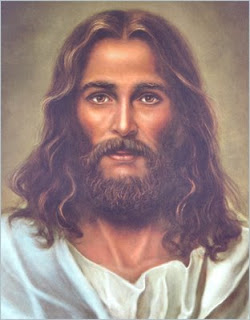
It's so obvious.

It’s so obvious.

The above image doesn’t do this post justice. A simple google search on “Was Jesus a werewolf?” reveals many anecdotes by bloggers who, as children, noticed the similarities between the images of Jesus in their churches and werewolves. In essence, they made the connection between the two because painters’ renditions of Jesus looked sort of like Michael J. Fox’s Teen Wolf. But that’s not where this post is going. The “Jesus kinda looks like a wolf” argument is superficial. For the purposes of this post, I’ll be looking into the origins of the celebration of Easter, thanks to Catholic.com.

According to this Catholic website, the date of Easter is determined by the lunar cycle. They write:

[Early Christians] decided that Easter would be celebrated on the first Sunday after (never on) the Paschal full moon.

Theoretically, the Paschal full moon is the first full moon occurring on or after the spring equinox. …

In other words, Jesus rose from the dead the day after a full moon. … y’know, kind of like the way werewolves become human again the day after a full moon. We can make the argument that Jesus wasn’t really dead for three days; he was actually a werewolf, running around Jerusalem, terrorizing the Romans and the Pharisees. This might also explain why the women found Jesus’ tomb empty. He was too busy feasting on human bones to be playing dead inside a cave.

But wait, I hear you say. Full moons only last a day, not three!

Well, you’re wrong. The full moon actually only lasts for a second. The apparent full moon, however, can totally last for three days. The myths about werewolves depend on our perception of the full moon, not the actual time half of the moon is completely illuminated from earth’s vantage point.

Jesus wasn’t a zombie! Zombies are reanimated corpses. But Jesus wasn’t a corpse; the bible says he came back as living flesh after mysteriously being missing for three days. He just happened to come back the day after the full moon. So what was Jesus doing during that time? I argue he grew fangs and claws and did his best Esau impersonation, while howling at the moon. When the full moon subsided, he came back to town and pretended like nothing happened.

I don’t believe in Jesus. I’m not even entirely convinced a historical Jesus existed. But his story more closely resembles our werewolf myths than they do our zombie myths. And if this post isn’t enough to convince you of that, I’ll leave you with this:

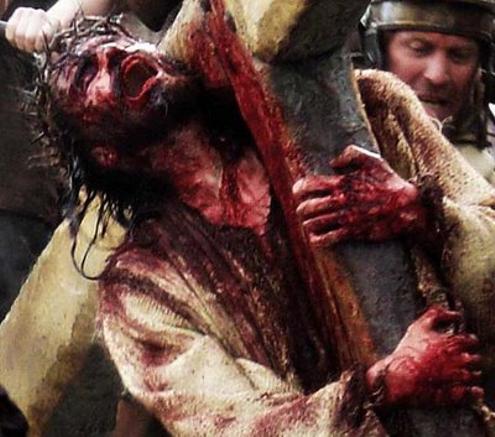
In this archived photo, Jesus of Nazareth is seen howling, covered in his victims' blood.

In this archived photo (ca. 33 AD), Jesus of Nazareth is seen howling, covered in his victims’ blood.

This Easter I want to see more werewolf memes and fewer zombie memes.

Posted in Satire | Tagged , , , , , | 3 Comments

Anti-Atheist Prejudice (Part 3) (SS#10)

For the past two weeks I’ve been reviewing the academic literature about anti-atheist prejudice in the US (here and here). In both reviews I’ve explained some recommended prejudice mitigating factors and even offered some of my own. This week I’ll let Will M. Gervais of the University of Kentucky take over some of these duties. In his piece “In Godlessness We Distrust: Using Social Psychology to Solve the Puzzle of Anti-atheist Prejudice,” published in Social and Personality Psychology Compass 7/6 (2013): 366–377, Gervais performs a literature review of his own and makes a series of suggestions for how to reduce anti-atheist prejudice.

Using four social psychological models, Gervais tackles the question: How can we explain anti-atheist prejudice? Answering this question is a necessary step towards reducing prejudice.

  1. A historical view of prejudice as unidimensional. In other words, we like people who are similar to us and dislike those who are not.
  2. Intergroup conflict approach. In other words, religious in-groups might see atheists as a threat in terms of resources (both tangible and intangible resources).
  3. Group morality approach. That is, it might be that atheists pose a threat to religions’ inherent morality and scripturally-based values.
  4. Stereotype content model. In this model, a perception of atheists at certain levels of warmth and competence might espouse a view of atheists as pitiful and envied.

Next, Gervais uses these models and dives into the evolutionary and culturally evolutionary domains of anti-atheist prejudice: how humans evolved to be social animals who either value some humans for their resources or view others as threats. A non-believer in this context breaks from the social norms in a way sufficient to explain prejudice using some of the above-mentioned models. He or she is 1) dissimilar to the group, 2) poses a perceived existential threat, and 3) poses a perceived threat to morals and values.

In terms of cultural evolution, I’ll let Gervais sum up the literature:

Belief in watchful, moralizing gods may produce the same behavioral consequences as does a credible threat of corporeal punishment among believers, but not everybody believes that any gods are watching or even real. Thus, to a believer, atheists might be perceived as a potential cooperative threat.

Once again, we can see how this fits with 1, 2, and 3 above.

Distrust, that ever-recurring theme

As I’ve found in both previous reviews, distrust is the number one cause of prejudice against atheists. This apparent fact is not lost on Gervais, but he has some problems with the methodology that resulted in these findings in previous research. Citing his own previous research, he finds that:

Belief in a morally concerned god appears instrumental in distrust of atheists. At the same time, other factors likely contribute.

That is, it’s easy to infer things about people who identify as Christian or Hindu (etc.) without any more description. On the other hand, it’s incredibly difficult to avoid conjunction fallacies when inferring truths about atheists, leading to suspicion and the view of atheists as wildcards, capable of holding any negative trait.

How can we mitigate anti-atheist prejudice?

Gervais uses this finding as a springboard to make predictions. Most importantly, “distrust is surprisingly malleable.”

First, using a novel approach he developed in the article I reviewed last week,

Providing accurate information about the actual prevalence of atheists might be one purely informational intervention to reduce distrust of atheists.

Atheists are vast, much more numerous than many might expect. Their numbers rival those of the three largest religions in the world. And in contrast to prejudices painting atheists as not trustworthy, atheists do not wreak havoc on the societies in which they live. Just because they are content that god is not there to mete out divine justice does not mean they will break the law. Because of this reality, simply publishing stats about atheist prevalence might greatly reduce anti-atheist prejudice.

Second, science has uncovered many things about the world in which we live that give alternative, non-supernatural meaning to our lives. “Trust in science,” he says:

Alternative sources of meaning and coherence may undermine the motivation that promotes religiosity and in turn reduce anti-atheist prejudice.

Interestingly, reading about evolution can also reduce anti-atheist prejudice (Magee & Hardin, 2010).

In other words, educating people about the findings of science (and, I suppose, philosophy) can reduce the prejudices formed against atheists.

And finally, Gervais brings in one of the most obvious tools for mitigating distrust of atheists: the government. Specifically, the branch of the government with the power to punish wrongdoers. I’ve written about this before. In previous research, Gervais found that reminding people that the police exist reduces distrust of atheists. Gervais sums it up as:

Three experiments also revealed that experimentally priming secular authority concepts reduces believers’ distrust of atheists.

No discussion, but some final notes

This post is merely a pause in the presentation of new material for this ongoing literature review. So far during the last few weeks, I’ve discussed how distrust is a key variable preventing atheists from holding higher office in the US and how atheist prevalence (or the perception of it) can reduce anti-atheist prejudice. This post offers some context and suggestions, via Will M. Gervais. Next week, however, I’m diving back into the cold reality of the prejudices we face as non-believers.

Finally, I’d like to point out that I left out a lot from Gervais’ research in this post, including findings that support the fourth model of prejudice. For example, he has a lengthy discussion about a series of experiments he performed. I skipped over that discussion primarily because I’ll probably review those experiments in the future.

Posted in Science Sundays | Tagged , , , , , | 2 Comments

Sappho’s Problem with Evil: And Why Do Gods Refuse to Die?

Sappho says, death is an evil, the gods have so judged, for if death were good, then they too would die.

Sappho on the Gods

(Greek courtesy of Aristotle via Aristotelis Ars Rhetorica, Oxford, 1959)

According to Aristotle, these are the words so penned by ancient Greek lyrical poet Sappho (c. 610 — c. 570 BCE). In terms of philosophy, her argument has always struck me — first for its flawed premises, and second, for its ability to overcome its flawed premises and demonstrate a coherent and logical accusation against the act of dying. Or against the gods.

Sappho

Her argument can be summed up as follows:

If dying were a good thing, then the gods would die. But because they do not die, dying must not be good.

We encounter the problem with her premises, however, when we realize she’s working under the assumption that the gods are indeed good. Therefore, we are left with two competing arguments*: 1) Sappho’s argument makes sense, or 2) there’s another, more sinister truth, which is:

If dying were a good thing, then the gods would die. But because they do not die, the gods must be evil.

In other words, either dying is evil, or the gods are evil for refusing to die.

Sappho was addressing a conceptualization about the gods that still exists today: namely, omnipotence. In other words, the gods have unlimited power. Surely this extends to the power to choose to die. To illustrate this, Sappho was incorrect about one thing; Chiron died by transferring his immortality to a human. He exercised his powers in a manner sufficient to cause his own death. In the Abrahamic religions we have a god with the very same abilities. Omnipotence necessarily implies god can choose to die, but he refuses to die while allowing every single living thing to die in his stead.

But wait! Didn’t Jesus die?

Well, did Jesus actually die? With the exception of Achilles (and a few other gods that escape me), dead gods do not generally survive to talk about the state of being dead. And they don’t come back to life. If Jesus died then his living physical body would not have flown to the heavens. If Jesus had died, then he would be dead. Dying and then coming back to life is not the same as dying. The guarantee of life after death negates death.

Of course, the bible tries to find an answer to this problem with death: Certain humans too will share immortality in some unknown future. But that says nothing for the vast majority of us. Indeed, going back to Sappho’s original argument, the argument that some humans will live forever while others die says more about the god they worship than it does about whether or not death is good or evil.

Sappho’s conclusion that death is evil brings up a lot of questions about the Abrahamic religions’ problem of evil. If god was so good, then god would choose to die, wouldn’t he?

*The reality is, however, that we have other syllogisms about death that better reflect reality. This post disregards the limits of our knowledge about death and focuses instead on arguments made in the metaphysical context.

Posted in Atheism | Tagged , , , , , | 2 Comments

Anti-Atheist Prejudice (Part 2) (SS#9)

If everyone in the world believed in god except me, there wouldn’t be much of a reason to form prejudices against me. At worst you’d probably just think I’m crazy. I wouldn’t be perceived as a threat. I’d just be an eccentric member of society who doesn’t grasp something blatantly obvious to the rest of its members. But what happens when the population of non-believers rivals that of the world’s major religions?

Common sense — and, indeed, previous research — would suggest as the out-group populations grow, in-group populations form stronger prejudices about the out-group. But, interestingly, the opposite appears true for prejudices about atheism. In this episode of Science Sunday, I’ll be looking at Will M. Gervais’ “Finding the Faithless: Perceived Atheist Prevalence Reduces Anti-Atheist Prejudice,” published in Personality and Social Psychology Bulletin 37(4) 543–556, 2011.

Gervais conducts four studies to come to this conclusion: 1) What is the relationship between anti-atheist prejudice and believers in countries with robust atheist populations? 2) What is the relationship between atheist prevalence and anti-atheist prejudice? 3) Is there a causal relationship between reminders of atheist prevalence and atheist distrust? And 4) what is the relationship between prevalence information and atheist distrust?

To come to his conclusions he runs an assortment of various correlation analyses and multivariate regressions. For the sake of saving time and not littering this post with p-values, r-squares, and whatnot, I’ll summarize his findings. For the statisticians out there who want to see the results of his analyses, you can check his work on the “Publications” section of his website. Please note, Gervais posts his work for personal academic analysis, not for commercial purposes or for widespread dissemination. Please respect his requests.

Results

Study 1

Gervais looks at anti-atheist prejudices across 54 countries and concludes a negative correlation: As atheist prevalence in a country increases, the perception of anti-atheist prejudice decreases.

Study 2

He then asks the same question, but instead of applying it to states generally, he brings it down to the individual level. With a sample size of 104 undergraduates, he finds a statistically significant negative correlation between atheist prevalence and anti-atheist prejudices. As atheist prevalence increases, individual prejudice against atheists decreases.

Studies 3 and 4

Using samples of 112 and 80 undergraduates, respectably, Gervais finds a negative correlation between reminders of atheist prevalence and atheist distrust. He writes, “Information that atheists are actually quite common, both worldwide and in the immediate environment, reduced distrust of atheists.” He furthermore finds, “As hypothesized, implicit distrust was lower in the atheist prevalence condition than in the control condition.”

Discussion

Gervais has a very hearty discussion section in his article, but for the sake of this post, I will (largely) ignore his discussion and treat this as part of a literature review.

Last week I looked at research by Andrew S. Franks and Kyle C. Scherr that suggests atheists are the most disadvantaged group at the polls. In other words, if a self-proclaimed atheist is running for office in the US — and all other things equal — he or she suffers a deficit in support that greatly reduces the chances of them being elected. This deficit is the result, the study suggests, of the perception of atheists as 1) distrustful, 2) disgusting, and 3) threatening.

Gervais’ research, however, might offer us some insight into how to mitigate and possibly reverse Franks’ and Scherr’s findings. If, for example, distrust against atheists is lowered by simply reminding people that atheists are common, then a simple non-partisan media campaign by a secular organization prior to an election might reduce some of the deficit the atheist candidate suffers.

Furthermore, we might be able to run similar studies to find relationships between atheist prevalence information and Franks’ and Scherr’s other variables. If the dissemination of atheist prevalence information reduces distrust against atheists, might it also reduce the perceptions of atheists as threatening and disgusting? I hypothesize that reminding the public that atheists are prevalent will reduce the perception of atheists as threatening and disgusting.

Finally, of particular note, Gervais tackles the “coming out of the closet” issue regarding atheists. Instead of suggesting atheists risk social estrangement by publicly stating their atheism in an effort to reduce anti-atheist prejudice, he offers a novel approach: Simply publicize atheist prevalence numbers. He writes,

[T]he present results indicate that merely providing information about collective prevalence could reduce prejudice, obviating the need for individual disclosure.

In other words, atheists need not “out” themselves and risk stigma. Removing this obstacle allows concealed atheists to have their cake and eat it too. They can share the benefits of living in a society that is less prejudiced against atheists while keeping their social identity free of stigma until such a time that the stigma has been sufficiently reduced. This is a rather remarkable suggestion, which is why next week I will be reviewing another study by Gervais.

Posted in Science Sundays | Tagged , , , , | 3 Comments

Reflections on We Are Atheism Scandal

Note: This is not a very coherent post. It’s basically a stream of thought reflection.

Today I came across this article by Hemant Mehta, who writes for the Friendly Atheist on Patheos. In it he draws our attention to serious issues regarding an atheist non-profit organization’s transparency. The organization in question is We Are Atheism. Basically, he found major discrepancies between how much money they claimed to take in before being granted non-profit status and how much money they donated to various causes for which they were raising that money. He also had concerns about how they were choosing how to distribute this money.

I urge you to read his article. It’s an in-depth examination, and I’d rather not write 10,000 words to sum up his findings. This post is merely to reflect on his investigation.

When I read Mehta’s expose — if you will — my heart sunk in my chest. Although I’ve never donated to We Are Atheism, I felt defeated, cheated. I should stop right here and frame the necessary caveats. Mehta is not necessarily accusing We Are Atheism of anything. He’s not claiming they broke the law or embezzled from donors. He’s merely pointing out discrepancies. But these discrepancies — at face value — are rather damning, and are sufficient fuel for evangelical groups to accuse atheist organizations of being dishonest, immoral, or criminal, something atheists already put up with enough.

Thankfully, Mehta is an atheist. Because an atheist exposed We Are Atheism’s inconsistencies, it communicates the message that we will hold our own accountable. Although we’re not a coherent and cohesive group, the perception about one atheist can easily be applied to the rest of us. Mehta’s article shows that the acts of one do not reflect the acts of the many.

Prior to publishing his article, Mehta contacted We Are Atheism to get their side of the story, speaking with Amanda Brown, who accepted full responsibility for “royally fucking up” the Paypal donation transactions. This is unacceptable. If Brown was not knowledgable in basic accounting she should have not accepted donations until she had a grasp on what she was setting out to do. It’s my opinion that she should resign her post with the organization. Let’s assume for a second that she’s being honest — that this was a simple yet major mistake on her part. Her resignation is a necessary (yet insufficient) step towards regaining my trust in We Are Atheism.

It’s also my hope that We Are Atheism does regain my trust — and the trust of a lot of other people. There aren’t that many atheist organizations out there both raising awareness about atheists and secularism and helping our communities heal following disasters. This black eye doesn’t have to spell doom; it could be a wake up call to the organization to get better organized.

Then again, if there’s criminal activity involved, all parties should be held accountable.

Posted in Atheism | Tagged , , | 1 Comment

Anti-Atheist Prejudice (Part 1) (SS#8)

Over the next several weeks I will be reviewing the literature regarding prejudice towards atheists in what will ultimately become a comprehensive literature review. This review, once complete, should suffice to say, “Prejudice against atheists is rampant.” Most, if not all, of these studies have been conducted in the United States, but I will be actively seeking all studies — even any that contradict me — which will, hopefully, examine this issue across the globe.

Part 1

This week I will be examining “A sociofunctional approach to prejudice at the polls: are atheists more politically disadvantaged than gays and blacks?” by Andrew S. Franks and Kyle C. Scherr from the Department of Psychology, Central Michigan University. This article appears in the Journal of Applied Psychology 2014, 44, pp. 681-691. The authors use four scales to determine which group of political candidates — atheists, gays, or blacks — suffer the greatest disadvantage.

Franks and Scherr begin their study by referencing previous research that has exposed perceptibly systemic prejudice against atheists in all facets of everyday life and against potential atheist candidates for public office. It’s here where they identify the gap in our knowledge and the problem:

[D]espite naturalistic polling indicating a deficit in support for atheist candidates compared with other types of candidates, no research has experimentally examined the magnitude of these deficits and, perhaps more importantly, the content associated with voters’ unwillingness to support atheist candidates (681).

They then point to previous research indicating core prejudice factors of minority groups, which indicate distrust is a recurring theme. They therefore examine the content of political public opinion polls and pit atheist candidates against gay, black, and other minority groups to determine to what extent atheist candidates suffer a polling deficit.

Why distrust?

The researchers first examine the wealth of literature in this field and discover a persistent theme among groups who share set religious identities. That is:

The feeling that “God is watching” seems to promote adherence to binding forms of morality (e.g., Haidt, 2007) and shared social norms (Henrich et al., 2010) that serve to both regulate a person’s behavior and give others reason to believe their behavior will conform to social norms even when nobody else is around (682).

In other words, the perception among certain religious groups of an all-watching god tends to paint non-believers as free to break from social norms when nobody is watching them. For example, they cite Christian fears that an atheistic position on the existence of god would lead to “uncontrolled violent and sexual impulses and selfish behaviors that undermine the social order” (682). These findings, they conclude, might help explain why atheists are more likely to be distrusted than other minority groups.

From an evolutionary standpoint, they argue, this makes sense when applied to political candidates. Having a wildcard leader is not an effective way to promote the survival of the group.

Distrust is not necessarily a more important variable to voters than other variables. Gays, they find, suffer prejudice because of the perception of being “potential sources of pathogen contamination due to associations with sexually transmitted infections” and blacks, who are “perceived as threats to physical safety due to associations with violent street crime” (682). Therefore, the researchers develop four hypotheses to determine which group is more disadvantaged at the polls than the others.

Hypotheses

Hypothesis 1: Christians will most likely vote for straight white Christians. After this, in descending order they are most likely to vote for a black candidate, a gay candidate, and then an atheist candidate in last place.

Hypothesis 2: Atheists will be deemed the least trustworthy.

Hypothesis 3: Gays will be deemed the most disgusting.

Hypothesis 4: Blacks will be deemed the most threatening.

Methods and Procedures

The researchers then used a sample (n=200) of US citizens gathered from Amazon’s Mechanical Turk online workforce. This sample size is smaller than I would have liked. I would have preferred a sample size about twice as large, but it is sufficient for the purposes of this research.

Participants then completed a survey about a political candidate, only using information about the candidates supplied by the research team:

The candidate was always described as a 39-year-old, male named Greg whose agenda prioritized the economy, health care, and education. Participants were randomly assigned to read about a candidate who was characterized by one of four descriptions: White heterosexual Christian (WHC), Black heterosexual Christian (BLK), White gay Christian (GAY), or White heterosexual atheist (ATH) (684).

The participants rated these candidates along four scales. First, how likely they are to vote for the candidate. Second, third, and fourth, how trustworthy, threatening, and then disgusting the candidate is.

Findings

The findings were rather surprising. Not only did atheists score lowest on the distrust-trust scale, they also scored lowest on the threatening-comforting scale and low on the disgusting-appealing scale. Atheists are perceived as untrustworthy, threatening, and disgusting. In contrast, gays and blacks overcame their respective hypotheses either with insignificant correlations or by scoring higher on other scales:

Our results suggest that atheists, compared with gays and Blacks, suffer the greatest disadvantage as political candidates because they received the lowest levels of voting intentions and elicited fear, disgust, and strong levels of distrust from Christian voters. Although distrust may be the core affective component in anti-atheist prejudice (e.g., Gervais et al., 2011), the broad range of negative emotions elicited by the atheist candidate in this study is consistent with other research demonstrating that exposure to atheist ideas causes Christians to feel disgust (Ritter & Preston, 2011) (687)

The study concludes:

Atheism and secularism are particularly under-represented in the political sphere. The current study demonstrates not only the magnitude of anti-atheist prejudice in politics but also the depth and breadth of negative feelings underlying that prejudice (689).

Discussion

The findings of this research are very interesting. There are some very strong p-values in there, as well as some weaker p-values — the weaker p-values actually strengthen the first hypothesis. Personally, I would like to see this study replicated using a larger sample to see whether or not we get the same results (n=500, for example). Of particular note, their sample was relatively split between Christians and non-religious people. This leaves room for future research: 1) we can replicate the study using only religious people, 2) we can replicate the study using only non-religious people, and 3) we can replicate the study using a sample that accurately reflects the American demographic. These studies might help us better understand to what extent prejudice against atheists is systemic in American religious populations.

Of course, this is only in America. For whatever reason, electing atheists to public office is rather normal in other parts of the world.

Posted in Science Sundays | Tagged , , , , , | 4 Comments

The Is-Ought Dilemma: And How a Young Suicide Bomber Learned Nothing

All we can talk about today is the reported suicide attack in Iraq by Australian teen and convert to Islam, Jake Bilardi. Jake defected from his home country and middle class Melbourne family to join the Islamic State (IS) with dreams of becoming a “martyr” for Islam. After the death of his mother, the self-reported former atheist turned to Islam and, through his Internet study of the politics of the Middle East and the wars lead by the West, grew deep hatred and distrust of America and Australia. And so he traveled to Ramadi with the explicit purpose of killing Shias and non-Muslims. …and himself.

How does this happen? I don’t know. It’s incredibly frustrating that seemingly reasonable children can wake up one day and become unreasonable. I call him unreasonable because suicide missions are by definition irrational. Suicide terrorists are no longer alive to share in any benefit their deaths bring. The definition of rationality is operating in a manner sufficient to maximize the utility of the resources at your disposal. Using them to commit suicide in no way maximizes their utility.

Anyway, through my reading I became aware that Bilardi had written a blog where he explains why he chose to become a suicide terrorist. This article by Daily Mail has an excerpt (in the blue box) that gives us all we need to know. I recommend taking a moment to read his words before continuing to my main arguments below.

In his blog post, Bilardi appears to believe he can make a positive impact on his adoptive society and, perhaps, the world by killing himself. To me this appears a recurring theme in people engaged in suicide protest. Through my research into self-immolation, every actor honestly believed their death would compel society or a government to undo a wrong. The problem is they were mistaken, and their deaths were in vain. When it comes to suicide terrorists, their deaths are not only often in vain; their deaths are murderous, which makes it even less likely they’ll ever find a sympathetic audience.

You see, this brings up the philosophical question about is versus ought, articulated by David Hume, and often called “Hume’s guillotine.” Bilardi’s suicide was meant to compel a sympathetic audience to change the way something is to the way it ought to be. But how can a teenager understand how things ought to be if the world can’t even agree on how it ought to be? Furthermore, how can one go from descriptive facts to objective prescriptions? Isn’t a prescription itself, even if we agree on the descriptions, subjective? These questions arise because we don’t even know how the world is?! Without being able to explain how something is, we cannot come to a consensus about how it ought to be. Even if we agreed on how the world is, agreeing on how it ought to be is a rather challenging feat.

This is one of the reasons I got into political science in the first place. I had ideas of how the world ought to be, and I came into the program years ago hoping to make a difference. I learned very quickly that one person can’t make a difference if a) he cannot accurately describe the thing he wants to change, and b) there’s disagreement about how this thing should change. In other words, my job now is to figure out how the world is — which, I confess, is rather impossible. Only when I know how the world is can I tackle the immensely challenging disagreement of how it ought to be.

Bilardi, however, made up his mind without ever learning a damned thing! He chose to adopt a religious philosophy that fails to accurately provide a descriptive basis, and he used this flawed philosophy to justify killing himself and others. This kind of commitment to a failed philosophy is remarkable and piques the interests of scores of political scientists, and I think we can all agree that this kind of commitment would be better served in academic halls. If he had spent this much effort in forming a demonstrable descriptive basis for the problems he perceived, then he might’ve had a fighting chance at changing the descriptive basis through prescriptive statements. And not a drop of blood would’ve been spilt.

This is the fundamental difference between the sciences and religions. Science is primarily concerned with accurately describing reality so it can determine problems and perhaps prescribe a solution. Religion is primarily concerned with maintaining its predetermined description of reality and prescribing only reaction to changing norms. One of these actually has the potential to help society. The other has the actual potential to harm society. If only Bilardi had seen the difference before he killed himself and others.

Posted in Political Science | Tagged , , , , , , , | 1 Comment

Response to “10 Signs Christianity Is on the Rise”

I woke up this morning to find this article by Tom Hoopes titled “10 Signs Christianity Is on the Rise.” I read these kinds of things from time to time, and usually they leave my desk with no comment. But when I read this one, each and every point he tried to make was either uninformed at best or dishonest at worst. Either way, his points are so easily refuted by looking at the research into his claims that I’ve decided to address them, point by point.

1. Christianity is growing by leaps and bounds worldwide.

Hoopes starts by writing, “The research shows Christian numbers rising, not falling worldwide.” First I want to take issue with Hoopes for committing the number one sin in reporting. What research?! Although this is a clerical matter, and it in no way means Hoopes is mistaken, he should’ve known better than to not cite his sources.

Anyway, moving on. Even though Hoopes offers no evidence to support this statement, he’s right. As Pippa Norris and Ronald Inglehart pointed out in 2004, Christianity — and indeed all religious beliefs — will continue in an upward trend globally for many years. But their research also points out that religion is declining in industrialized states and will continue to decline as states modernize. This happens, they posit, because the church is often a source of hope in societies where the threat of death from disease, starvation, or murder is common. As our existential security increases, we find hope in secular places. As disease, starvation, or murder loses its monopoly on our fears, the church loses its monopoly on our hopes. In other words, yes, Christianity is growing much faster than it’s declining globally, but in the industrialized world, it’s been put on the endangered religions list.

2. Nominal Christianity is dead — and that’s a good thing.

In his second point, Hoopes argues that the decline of Christianity in the US is a product of fake Christians finally leaving Christianity. Here Hoopes makes an ad hoc no true Scotsman fallacy. He appears to believe that Christians who leave the church were never Christians to begin with, so good riddance to them! He cites the growing acceptance of atheism as an alternative to Christ as the cause of this, which may be true. Some atheists are closet atheists who pretend to follow a particular religion out of fear of being socially ostracized. But to say it’s a good thing to get rid of them because they weren’t real Christians is merely to ignore objective realities in order to maintain a rhetorical position. Yes, it’s good that atheists are freer today to leave Christianity, but try to avoid rationalizing this reality with us-them arguments.

3. The Church is promoting the sacraments.

Hoopes laments dwindling Catholic attendance at Mass. But his entire argument that this is no indication of a dying church is a planned Vatican event for this Friday. He argues this event has already seen positive results as other cities make preparations for it, but that’s merely a self-fulfilling prophesy. In other words, if you think more Catholics will eventually attend Mass and then organize a massive global Mass, of course more Catholics will attend Mass — that Mass. What happens a month later? Is it likely the Catholic church will substantially and permanently increase Mass attendance, or, going back to the first point, has industrialization in the US affectively put Christianity into a death spiral?

4. Eucharistic Adoration is on the rise.

Here Hoopes essentially makes the same argument as above: The Vatican building Eucharist Adoration chapels is a sign that Catholicism is growing in the US. No. It’s a sign that the church is building buildings. If future generations utilize those buildings at a higher rate then they do now, then Hoopes will have a point. For now, he’s just making prophesy. Furthermore, he makes this argument despite his previous lament that Catholicism is on the decline in the US. If you build it, that doesn’t necessarily mean they will come.

5. Catholic youth movements have never been stronger.

At face value Hoopes has a point here. He cites unprecedented attendance at the church’s World Youth Day and at pro-life rallies. But if we look at the research, this type of activistic growth is to be expected in the face of religion’s weakening grasp. Norris and Inglehart’s study suggests that as religion declines in industrialized and industrializing states, the church will push back against these changing norms with equal force. As these sincerely and deeply held beliefs fall from normal practice, those who still maintain those beliefs must actively justify them. This isn’t a sign that Christianity is withstanding secularism; it’s actually evidence that Christianity is falling victim to secularism.

6. … and the Catholic youth movements are linked to higher education.

Hoopes believes that the massive increase in the National Catholic Register’s list of Catholic universities from 5 to over 30 is somehow a sign that Christianity is on the rise. But he admits this increase is a reaction against “hostile environments that dismantle students’ faith.” In other words, this is the same reactionary force I mentioned above. As universities and students become more secular, religious schools must push harder to justify the teaching of faith. Again, if we consult the research, we would see that this is evidence of a failing religion, not the other way around.

7. New, young vocations.

Hoopes argues that young people are becoming priests and nuns at sufficiently high numbers to replace the literally dying old priesthood. He cites “research” that shows young people are “even more likely” to become nuns and priests, but again he fails to cite that research. I have no idea where this claim came from, and I’m not about to take it at face value. But even if this is true, this phenomenon is occurring despite dwindling church membership. Having a sufficient number of young priests and nuns is meaningless if there’s no one making tithes.

8. Strong, engaged Bishops.

Here Hoopes argues that the Church is showing signs of strength because bishops are more actively getting involved in politics. He cites anti-abortion activism and anti-contraception activism. But again, these are reactionary forces against a secularizing state, not a sign that the church will survive.

9. A new interest in Scripture.

He argues that popular culture — such as the Da Vinci Code — have piqued people’s interest in reading the bible, which is not a bad thing. But an increase in interest in the bible is not indicative of much. If Homer’s Odyssey came back into mainstream pop culture, that too would increase interest in the Odyssey, but that doesn’t mean there’d be an increase in people who worship Zeus.

Furthermore, I invite people to read the bible and then attempt to demonstrate the accuracy of the bible by looking at the evidence. This is how a lot of people go from Christian to atheist. If they can’t support the bible with secular, objective evidence, then they’re less likely to believe the bible.

10. The witness of the martyrs.

Lastly Hoopes makes an appeal to prophesy: If the bible is true then Christianity will survive. If it’s not true, then it will die. Well, duh. He finally writes “But since Jesus Christ really did die and rise and leave us the sacraments, don’t expect it to go away any time soon.” I should ask him, how do you know he really did die and rise…? He offers us nothing but religious conjecture. This final point doesn’t tell us a damned thing! It only serves to reinforce his own beliefs and his readers’ beliefs. It’s not an argument; it’s an opinion, one not supported by a single shred of evidence.

A Brief Discussion

If you believe in Christ, that’s cool with me. I’m only here asking that you justify your belief in the face of mountains of evidence to the contrary. But don’t be surprised if future generations leave the church at high rates. And don’t be surprised if Christianity goes the way of Mithraism.

If this world continues to modernize, then we should expect to see a continued trend towards secularism. Even states where religion is growing fast enough to more-than-compensate for the decline of religion elsewhere, we should expect to eventually see an identical reversal of that growth, given sufficient modernization. At least, this is what the evidence suggests.

Posted in Atheism | Tagged , , , | 9 Comments