Clashes, Sex, and Cognitive Dissonance

Later this month I’m giving two public presentations (one at a conference and one in a small, 10-person room) about a paper I’ve been working on for about six months (it gets moved around the burners depending on my workload). The point of these presentations is to allow faculty, students, and the general public to comment on my work prior to completing it. This allows me to catch mistakes I missed, learn from people in different fields who might have better insight into certain elements of my paper, and to offer myself an opportunity to take my work in new directions. Without getting too deep into the content of the 6,000 word paper, here are my main findings:

  1. Religiosity is a product of variances in existential security (see Pippa/Inglehart 2004). As existential security increases, religiosity decreases.
  2. Beliefs about gender and sex are constructed in the state of the world according to the degree of existential security. As existential security decreases, religiosity increases, and beliefs about gender and sex fall in line with traditional church/mosque doctrines. As existential security increases, beliefs about sex and gender secularize.
  3. If we take populations from areas of high religiosity and thus low existential security and displace them into a secular environment (for example, Muslim migrants from Morocco into Spain), cognitive dissonance and the host country’s insistence that the migrant’s traditional beliefs about human sexuality and gender are “backwards” can force the migrant to coalesce with other migrants and hold onto their beliefs (see Festinger, 1956). In other words, their traditional beliefs about sex and gender will self-reinforce due to an initial culture shock and the host country’s subsequent backlash against migration.
  4. The migrant community’s alienation and its consequent doubling down on beliefs—if it prevails—and if the migrant population grows large enough that it significantly overlaps with the host country’s secular communities—will form the basis of a future clash (see Huntington 1996), ranging from attempts at sectarianization through policy or social change to (when that fails) violent outbursts (e.g. the Madrid train bombings).
  5. This can be mitigated through industrialization, which increases existential security in lesser-developed nations. I freely admit this is going to be difficult, and furthermore, due to the effect of cognitive dissonance, it could take several generations to secularize beliefs about gender and sex. Personally, I wouldn’t count on Huntington’s “Clash” theory being proven wrong during our lifetimes.

The first time I presented this paper in December I got some good feedback and criticism about it. The best question I was asked was whether or not I thought the public school systems, which are generally secular organizations in most secular states, could prove me wrong about my view that it will take many generations before sectarian beliefs secularize. I am not so certain, and I made note of this in a subsequent draft of my paper. I wrote:

This is very likely true in many cases; however, the rate of immigration and familial pressures will hinder liberalization and secularization among these young populations. Furthermore, in the case of Islamic radicalization, there are several instances of young people—even Western-born people—being radicalized almost instantaneously. [Furthermore,] if education and social systems were able to adequately join the Moroccan/Algerian and Spanish societies in terms of their levels of secularization, it would have happened already.

[I confess that the last sentence is not very strong at all, and I will probably remove it or back it up substantially.]

So the point of this post—if you’ve made it this far—is to offer you an opportunity to comment on and critique my scholarly work. It isn’t that often when my academic career overlaps with this blog in any meaningful way. If you think I’ve missed something along the way, or even if you think I’m completely wrong, feel free to help me in the pursuit of truth.


Posted in Political Science | Tagged , , , , , | Leave a comment

Existential and Spiritual Threats: Why the Church Still Exists

Traditionally speaking states serve one purpose—to protect its subjects from internal and external threats. Without an existential threat from across the border or within it, for what purpose does the state exist? In order to protect its subjects the state must demonstrate that an “other” exists, whose values, religions, and perhaps skin colors are different from its subjects’. Or perhaps the “other” is a disease or some other real threat. Once an “other” has been defined we can institute policies of national security that reflect the variations between our values and those “other” values.

The church functions in a very similar fashion. The church’s role in our lives is to protect us from “spiritual” threats. Without a spiritual threat from a non-believer,* for what purpose does the church exist? If everyone agreed with that church’s teachings, the church would cease to exist. And in order to protect its subjects from spiritual threats, the church must demonstrate that an “other” exists, whose values contradict its own. Once this “other” has been defined the church institutes policies of doctrine that reflect the variations between their values and those “other” values.

*”Non-believer” here strictly means they who do not share the same religious beliefs.

I make a huge distinction here between my argument and the classical argument—that the church provides protection from death. If death were a compelling enough threat there would be no atheists.

The problem, which I’m certain many of you can see, is that spiritual threats are perceived precisely the same way that existential threats are perceived. The Islamic State and many Christian churches in Sub-Saharan Africa exemplify this. A common response to an existential threat is armed warfare. A common response to spiritual threat in the developing world is armed warfare. Indeed, the distinction between the two is often lost on Western governments. In the US in 1950 the Cold War was defined as a literal battle between god’s chosen people (the US) and god’s enemies (Communists). The NSC-68 was overtly sectarian and made numerous references to “godless” Soviet Union. In other words, few believers are able to distinguish between the state and the church when some form of threat arises.

But they should see these differences. When internal threats arise many states are good at dealing with those threats in secular ways. Small pox was eradicated not through prayer, but through modern medical science. Global warming is being combatted not through divine intervention, but through innovation, dialogue, and research.

Back to the small pox point; diseases are wiped out, cured, or mitigated regardless of religion. And diseases decimate and kill regardless of religion. The differences between humans of faith are socially constructed and serve no other purpose than to create an “other” so that the church can protect you from them and survive. The church cannot protect you from disease, no matter how hard you pray.

The main point of this post is to argue that whatever the church can do, the state can do it better, and the state has more of a compelling need to protect its subject from threats. If the church ceases to function, no big deal; nothing changes. If the state ceases to function, then all manners of existential threats overwhelm populations, and untold numbers of people die horrible deaths. Why the church continues to function despite this is telling of one unfortunate thing: People need to know there is an “other” because without the “other” for what purpose does the church exist? In this sense the church is the epitome of bigotry.

Posted in Atheism, Uncategorized | Tagged , , , | Leave a comment

Should Atheists Lie about Beliefs for Love?

My girlfriend is Christian. She holds no judgements against me for not believing in god. Religion is never a topic of discussion, unless it’s in an academic sense or if it’s necessary to discuss a current event. She not only tolerates this blog; she laughs at some of the hidden jokes I sprinkle throughout my prose. But there’s a moderately large problem I see looming somewhere in the future.

I’ve never met her parents. Her father is a retired Southern Baptist minister, and he believes dating (or marriage) between Southern Baptists and non-Southern Baptists is forbidden. My girlfriend wants me to meet her family, but she guarantees me they will ask my religious beliefs very early on during our first dinner. I didn’t think this would be a problem because I can tell a whole truth that masks the whole truth. You see, I was born into a Southern Baptist family (but my parents never forced me to be religious).

The obvious solution to this problem would be to answer their questions about my religious beliefs with “I was raised in a Southern Baptist household” or “My family is Southern Baptist.” This is completely true, and there is no deception in that answer. But my girlfriend warns that this answer will not satisfy their inquest, so I have to either admit that I’m not Southern Baptist, or I must lie and say I am.

This presents a real conundrum to me: I personally feel it’s unethical and immoral to lie about my religious beliefs. But I also feel it’s wrong to throw my girlfriend under the bus by confessing to her parents that I do not believe the same things they believe. Without lying they will never sanction our relationship. But if I lie I will feel ashamed of myself.

There is no way to solve this problem without either harming my girlfriend, our relationship, or my own sense of pride.

So what should I do? I already know the answer: My pride must suffer for the sins of our love.

I suppose this is a sign of a much bigger problem about religion. Forget that I’m atheist! Pretend I’m a Christian for a second. A Pentecostal Christian. The mere fact that I’m not a Southern Baptist Christian is a death knell to parentally-sanctioned love. What fucking century do we live in again?!

Posted in Atheism, Uncategorized | Tagged , , , , | 6 Comments

Santa Myth is Not the Same as Religious Myths

For as far back as I can remember atheist bloggers and others have been drawing a comparison between telling your children Santa is real and telling your children they can literally live forever if they believe in Jesus. I’ve repeated this too, but today I had the following conversation with my girlfriend about this article (little girl sends her parents middle finger emoticon after learning the truth about Santa):

santa conversation.jpg

My girlfriend (in red) is a Christian, raised Southern Baptist. She knows my religious ideas and doesn’t mind at all (but that’s a different post for another day). But it’s important that she’s a believer and saying this because it shows us that the belief that telling your kids Santa is real is blockheaded is not solely the domain of non-believers.

I especially like it how she hits the nail on the head with “I just don’t know if I want my kids to thank Santa for all the things I worked hard to give them.” BAM!! I totally agree with this because we should be teaching our kids to appreciate the value of work and money—and not that material goods can magically appear (by some fat ass in a red suit who comes down your chimney, no less).

Most important, and back to the point in the first paragraph, telling your kids Santa is real is a lie. We know for a fact it’s not true. And, in my opinion, and in my girlfriend’s opinion, we should not be lying to our children. The reason I don’t think we should be comparing Santa to Jesus (or any other religious story) is because we don’t know if it’s true or false. Telling my children Jesus is really god’s son is not something I’ll ever do, but it hardly falls under the category of lie. Telling your children something is true when we don’t know it to be true or false is not the same as telling them something we know to be false.

And finally—and to repeat an oft-made argument—telling your children the truth about Santa from day one is a great way to instill healthy skepticism in young minds.

Posted in Atheism, Uncategorized | Tagged , , , , | 1 Comment

Hunger (Strikes) Games: Palestinian Prisoners in Israel

This post has little to do with religion (aside from the Israel/Palestine debate), but I thought the subject worthy of an article on this blog.

In 2012 Palestinian prisoners being held indefinitely in Israeli jails staged a massive and highly successful hunger strike that compelled the Israeli government and military forces to give into the Palestinians’ demands. This was an incredible achievement, but game theoretical literature on this topic is scant (actually it straight up does not exist). So lately I’ve been developing my own model to explain the prisoners’ and Israel’s actions.

If you’re familiar with game theory and extensive form games, this will make the most sense to you, and I ask for feedback (good or bad) because this is not a fully developed model (I haven’t even gotten to the maths yet). Please note I had to make some inferences about each players’ preferences. These might not reflect reality, but they’re as close as I can assume at this point.

hunger strike game

The rudimentarily designed game above is quite long, so I divided it into two parts.

To illustrate this game, assume Player 1 is a suspected Palestinian militant who is being held indefinitely in an Israeli prison without trial. He wants to protest these conditions and force the Israeli government to give him a fair trial. The prisoner is aware of hunger strikes as a tool because he has seen it successfully used in this prison. He is also aware that some hunger strikers die playing this game. He is willing to take that risk and is willing to die if Player 2 (Israel) does not give into his demands. For the purpose of simplicity, I will call the prisoner “He” and the Israeli government “She.”

At the first node, Player 1 decides to go on a hunger strike (HS) or not (~HS). If he plays ~HS then status quo is maintained and the payouts are -10, 10. Here Player 2 gets 10 because she has interest in keeping the prisoner in prison and also has interest in preventing mass media coverage of yet another hunger strike in Israeli prisons. Player 1 gets -10 because he loses any potential media coverage that could draw public attention to his plight. He also must remain in prison without trial.

If he plays HS the game moves on to the next node. At node 2 the Israeli government must decide whether to resist Player 1’s demands (R) or acquiesce and give into those demands (A). If she plays A the payouts are 5, 5. She receives 5 because she has given into Player 1’s demands but also prevented mass media coverage or a mass hunger strike. Player 1 gets 5 because his demands are met but no attention has been brought to his case. He still must go to trial with ineffective, indigent counselor.

If she plays R the game moves on to the next node. At node 3 Player 1 again must decide between HS and ~HS. If he plays ~HS he ends his hunger strike and the game is over. The payouts are now -8, 8. He receives -8 because he is still in prison. His payouts are a little better than if He played ~HS in the first node because now there is media attention about his case. He gets a slightly better lawyer to represent him (even though there’s still no trial). Player 2 receives 8 because she lost some of the payout from the first node but the amount of media attention is small.

If he plays HS the game moves on to the next node. At node 4 Player 2 decides between R and A. If A, the game is over. Player 1 receives a trial and maybe a better lawyer. Payout is 7, 3. Media attention has diminished Player 2’s payout.

At each node the payouts increasingly turn in the prisoner’s favor, alternating between negative values for ~HS and positive values for A. This diminishes the Israeli government’s payouts for each players’ respective plays. This gives Player 1 incentive to continue the game as long as possible. It also gives Player 2 incentive to end the game as soon as possible… just not yet. At most plays of HS, Player 2 can do better by playing R and hoping Player 1 plays ~HS at the next node. This changes as the game nears the point of Player 1’s death. At Player 2’s last point of play she will play A, giving into the hunger striker before Player 1 can play Death.

This game can continue theoretically in perpetuity until Player 1 dies. Although it is unlikely to get this far because Player 2 will acquiesce before this point, the payouts at death are 10, 0. By now massive media coverage is following the strike, bringing discredit to the Israeli government. Other prisoners have started their own hunger strikes in solidarity. This and the fact that Player 1 becomes a martyr give Player 1 his best payout even though he is not alive to enjoy it.

However, at the final node, when Player 1 knows death is imminent but survival is still possible, he can choose ~HS, which will make the payout 0, 2. Mass media coverage has brought a lot of attention to his plight, but he remains in an Israeli prison without trial. Not even his pro bono lawyer can help him now.

In order to solve this game I am using backwards induction to find subgame perfect equilibrium. In sum Player 1 is choosing to die and Player 2 always plays R until the last node she can play.

  1. Player 1 plays HS (if Player 2 plays A at next node 5 > -10)
  2. Player 2 plays R (if Player 1 plays ~HS at next node 8 > 5)
  3. Player 1 plays HS (if Player 2 plays A at next node 7 > -8)
  4. Player 2 plays R (if Player 1 plays ~HS at next node 4 > 3)
  5. Player 1 plays HS (if Player 2 plays A at next node 9 > -4)
  6. Player 2 plays A (no matter what Player 1 does in final node 2 > 1, 2 > 0)
  7. Player 1 plays HS (and dies) (10 > 1)

Equilibrium <HS, HS, HS, HS (and dies); R, R, A>

Please note that this applies only to the Palestinian Prisoner case, particularly the 2012 mass hunger strike. Some hunger strikes have been less successful for the protestors. For example, in the case of the massive California prison hunger strike in 2013, the vast majority (~99.7%) of the 29,000 protestors gave up their hunger strikes on their own very early in the game. The remaining ~0.3% gave up their hunger strikes when an appeals court threatened to begin force feeding (which is a different game).

Posted in Political Science | Tagged , , , , , | Leave a comment

The Best Way to Convert an Atheist to Religion Is to Become an Atheist

The title above is probably not only provocative; it’s also highly counterintuitive. But please bear with me. Before I approach the religious part of this post—that it’s easier to convert an atheist to religion if you’re an atheist—I’m going to provide you with an example from another area we probably all have experience with.

Let’s imagine you have a friend who is biased left or right politically. If left, they probably get their news from MSNBC or Think Progress or countless other left biased sources. If they are biased right, they probably get their news from Fox News. For the sake of this example, let’s strictly focus on a person who is right biased and who therefore watches Fox News more than any other source. If Fox News talk shows consistently report that same-sex marriage (for example) is wrong, then the right biased viewer will believe them. If the right biased viewer switches channels to MSNBC and hears Rachel Maddow argue that same-sex marriage is not wrong, then the right biased person is going to roll their eyes and disagree. I mean, right bias necessarily means they won’t trust someone with left bias. It makes perfect sense. This even goes so far as unbiased reporters. Let’s say a middle-of-the-road reporter says same-sex marriage is not wrong. The right biased person has no reason to trust her. But…

Let’s say the right biased person switches back to Bill O’Reilly. And Bill changes his mind about same-sex marriage and informs his viewers that same-sex marriage is not wrong, then the right biased viewer must make sense of this unexpected information coming from a right biased source and will be much more inclined to re-evaluate his position. Because he trusts Bill, he is going to look at this unexpected position in new light, and it’s much more likely that he’ll change positions himself. At least, it’s much, much, much more likely than if he heard this information from Rachel Maddow.

Speaking of Rachel Maddow, this goes a different way as well. Let’s say Rachel Maddow changed her opinion about same-sex marriage, what kind of belief updates would you expect from a right biased person? Precisely none because it would only serve to reinforce right biased positions, but that’s not really important.

I’m sure you can see exactly where I’m going with this.

If a religious person tells an atheist that Jesus loves him or Mohammad’s Quran is the truth, don’t expect any chance of conversion. The odds of a religious person converting most atheists who’ve been a non-believer for—let’s say—longer than a year is essentially zero. Atheists have no reason to believe a believer merely because the believer is speaking. Atheists and theists disagree on a fundamental aspect of all religions. But if—instead of a religious person explaining why god exists—an atheist changed her position on the existence of god, she would have more luck (slightly better than zero). The unexpected information will force some atheists to re-evaluate their own position and possibly change positions themselves.

I’m expecting some level of criticism here, so let me try to predict those points and address them.

This in no way means atheists are likely to convert merely because another atheist converted; it means, instead, that atheists are more likely to consider information from a converted former atheist than they are a lifelong theist. Then again, at the exact moment when the converted ex-atheist’s arguments sound identical to regular theist arguments, they’re going to lose the utility of being an ex-atheist. Atheists, therefore, are very likely to give the ex-atheist about two minutes before reverting back to atheist bias.

There’s also the problem with lying. If a theist knows it’s easier to convert an atheist if they are an ex-atheist, then the theist is more likely to lie, pretending to be an ex-atheist. This happens so much that atheists should be naturally skeptical about claims of being a former atheist. And with that being said, the skepticism of such a claim is sufficient enough to dismantle my entire argument above.

Then again, let’s say your best friend is a lifelong atheist who you’ve known and talked about religion with for twenty years. Let’s also say he converted to [some religion] tomorrow. This is where you are more likely to hear him out. He’s not some random evangelist with dubious claims of former atheism. This is your best friend. And the same might be true for some trusted non-best friends. If Richard Dawkins came out a Catholic tomorrow, I think most atheists would be willing to hear him out. He’s a smart guy; he might have a point.

Post script: We can prove this with the Bayesian Theorem.

Posted in Political Science | Tagged , , , , | 4 Comments

A Quick Quote from a Research Project I’m Working On

One of the main projects I’m tasked with this semester is to empirically analyze Islam in contemporary Europe since March 11, 2004. To do this I’m using World Values Survey data. Doing this as someone who is biased against Islam is particularly challenging, which is why I am undertaking this study; I want to prove to myself that I can be objective despite my biases. And wouldn’t you know it? The facts don’t fit my beliefs. Instead the facts have forced me to adopt better beliefs.

I’ll be writing up a brief post about my findings in December, but for now I leave you with a quote from my research that perfectly sums up my findings.

Secular Europe is not becoming more Islamic; instead, Islamic Europe is becoming more secular.

All it takes is a little security and a few new freedoms, and radical Islam melts away like butter.

Of course, radical Islam is still a thing in Europe, but it’s the product of something else, which I will address later.

Posted in Politics | Tagged , , , , | Leave a comment

Want to Legally Stop Evangelism? Become the State

I work for a publicly funded university. My office is small and windowless and has three computers shared between considerably more than three grad students. Whenever I feel cramped or frustrated I go outside and sit in the sun, watching all the undergrads go about their busy lives. I’m very much a people watcher, nostalgic for an easier life when my only stress was a chemistry exam. I enjoy living vicariously through them, spying on their academic lives for five minutes at a time. But this puts me directly in their paths, and some of these students are evangelical Christians who pick up on my curiosity, perhaps mistaking it for a search?

One young man in particular often uses the commons area right outside my building to spend time with young, impressionable students who perhaps are searching for something. That’s ok. He has every right to spread his religious beliefs…

…but he can’t have that conversation with me. I mean—literally—I’m not legally allowed to have that conversation with him.

You see, the wall of separation is not merely to prevent evangelical Christians from using state institutions as a platform for proselytizing; it also prevents me from using state institutions as a platform for telling them they’re wrong.

In my case, and from a legal perspective, I am the state. And, much like Christian or Muslim, et al, teachers can lose their jobs if they try to convert their students, I can lose my job if I attempt to shoot down students’ religious beliefs.

When it comes to my position at my university I am neither religious nor atheist.

I’ve purposely framed much of this post in a context that should be a sigh of relief for religious students who wish to use the university as a means of conversion. You, as a student, have every right to do that, but my right to tell you you’re wrong ends the moment I arrive on campus to perform my official duties. But there’s a downside; I legally cannot have these conversations with you, which means I am legally required to shoot down any attempts to convert me before they start. If you ask me if I’ve heard about your faith, please don’t be offended if I simply walk away. It’s not worth losing my job to tell you I don’t believe in god.

This obviously makes things very easy for me. The young man I mentioned above? Thankfully he took my decline with stride. On the other hand, however, I have had this conversation with him. And he knows I am not interested in his religion. But I didn’t tell him at the university; I told him when he knocked on my door trying to sell god.

Posted in Uncategorized | Tagged , , , | 1 Comment

Using Bayes’ Rule to Disprove Jesus Is a Double-Edged Sword

Last year historian Richard Carrier published On the Historicity of Jesus: Why We Might Have Reason for Doubt. While I haven’t read it (and therefore don’t plan on critiquing it now), it is on my reading list. As a grad student who messes around with Bayes’ Rule, it’s interesting to see its applications. But I’m especially skeptical of Carrier’s book because, while Bayes’ Rule is right, we can use it to make some very wrong assumptions. And we can create some very contradictory states of the world.

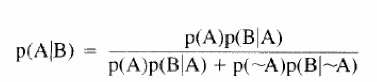
Again, while I haven’t read Carrier’s book, I can probably safely assume his equation looks something like this:

bayes rule2

Although I could be wrong wrong, and if I am please correct me. I’m assuming he’s using this equation because it posits a dichotomy; either Jesus existed or he did not (that’s the bottom part of equation). Basically, applied to the historicity of Jesus, this equation determines the probability of Jesus existing given no historical evidence for his existence. We can work this out quite easily, but we don’t have to because I’m certain we’d find the answer is essentially zero. This is probably the kind of reasoning Carrier uses in his book.

And to stress yet a third time, this is not a critique of his book because I haven’t read it. But rather, this post is to serve as a warning to you mathematicians out there who want to use these equations as proof. It can be very misleading if you’re not careful.

To put this into another context let’s look at the bible. There are indeed many instances of the bible getting something right, be it moral, ethical, historical, or even scientific (Jeremiah 33:22, for example, or incalculable sand and stars). We can determine the likelihood that god exists given these predictions or estimations. If we ignore what the bible got wrong, we can very easily prove the bible is very likely to be inspired by god. Essentially we can prove we live in a world where Jesus exists with Bayes’ Rule if we’re willing to go down that rabbit hole.

I hope you can see the contradiction. Bayes’ Rule can simultaneously be used to prove that Jesus didn’t exist and that Jesus did exist at the same time! But the good news is that once we do that we’re left right where we started; either Jesus existed or he didn’t. Both can’t be true at the same time, no matter what Bayes’ Rule proves. So the moral is: Be very careful with Bayes’ Rule.

Eventually I’ll get around to Carrier’s book. Maybe he did some more advanced math, making this article even less applicable to him. And if that’s the case, I’m sure I’ll enjoy reading and checking his work.

Posted in Uncategorized | Tagged , , , , , | Leave a comment

On Tempting Fate: Not Even Skepticism Can Cure My Irrational Fears

I’m a Ph.D student. I don’t write this to brag or infer that I’m an authority on any subject matter. Instead I write this because it’s central to this one cognitive failure I make again and again. Despite thinking of myself as a skeptic, I am almost always apprehensive about “tempting fate” in regards to my educational goals.

About once a week a bunch of us in the international studies department meet up for beers at a local pub to unwind and relax after a grueling week of graduate studies, conferences, presentations, and other associated work. A master’s student from another department often tags along since his girlfriend is in my program. He and I share the same name, and in order to alleviate some of the confusion, he suggested everyone call me Doctor Cowboy. I’m working on a doctorate and often wear a cowboy hat, so I can see where he’s coming from, but I also had to decline that title.

I feel as if it’s bad luck or tempting fate to call me Doctor prematurely—not to mention I haven’t earned the title yet. This is a major cognitive failure on my part. There’s absolutely no rational reason to think allowing people to call me Doctor will have any impact on whether or not I graduate the doctoral program. And the worst part is that I knew this was irrational even when I told him not to tempt fate.

Whether or not I earn the title Doctor depends solely on how much effort I’m willing to put into earning the title. But this is so important to me that I’m stupidly superstitious about a very trivial nickname. I guess this goes to show you that even Western educated, skeptical atheists can make classic errors in thinking. But I don’t judge myself for it. I know humans are hard wired to attribute cause everywhere.

And even though I’m publicly confessing that I often make this error, I’m going to continue to make it.

I don’t think I’m alone here, either. I bet some of you atheists out there secretly fear tempting fate too.

Posted in Atheism | Tagged , , , | 6 Comments