This relatively long post reflects an idea I’ve been considering for a long time. It’s by no means fully fleshed, and I welcome commentary, criticism, or contribution to the discussion from thinkers from all sides. This post discusses three analytical approaches: analytical eclecticism, dogma, and paradigm. Further down in this post, I will be applying it to matters of the divine. I’m not making an argument. Rather I’m discussing observations I’ve made and how I think those observations might be explained.
First, I need to get some definitions out of the way. This post will discuss understanding and explanation. For the purpose of this writing, “understanding” is an approach similar to the approach historians use. Why did the Korean War begin? this approach might ask. It answers the question by analyzing every nuance and event that led to the outbreak of war. It might pull from several fields and philosophies. This is called analytical eclecticism. “Explanation,” on the other hand, is to build a generalized theoretical framework that not only discerns the outbreak of the Korean War but can also be applied to war generally. This is a paradigm.
Another example might be medical doctors. Doctors in the ER are concerned with understanding each individual trauma patient who passes through triage. This is an important approach. Generalizing in the ER can be dangerous because human lives are at stake. Medical doctors in research fields, on the other hand, are less concerned with understanding each patient. Rather, they seek to explain a general phenomenon or disease. They seek correlation.
So here we have this academic divide. Although science and academics are almost universally on the side of paradigms, there is a small set of academics who think it’s better to use analytical eclecticism. They might argue that understanding each individual event in politics, for example, is the only way to use academic research to provide guidance to the politicians who hired them in the first place. Politicians, it seems, have been for several decades turning away from theoretical approaches and towards highly detailed eclecticism that often betrays the tested and tried paradigmatic models of explanation.
There’s a third side too, completely divorced from both paradigms and analytical eclecticism. It’s called dogma.
Imagine a scenario where a politician has to behave the exact same way every time an event occurs, even a generalized event. Imagine a dogma — a law, if you will — that required the US Congress to authorize the use of nuclear weapons against any act of foreign aggression against the US. Under this model, the US would nuke China every time one of its ships rams a US Navy ship. This is a highly extreme example, and I’m only using it for illustrative purposes. Things like this don’t happen. Instead of dogma, politicians seek to understand every act of aggression against the US in order to make decisions regarding how to handle them.
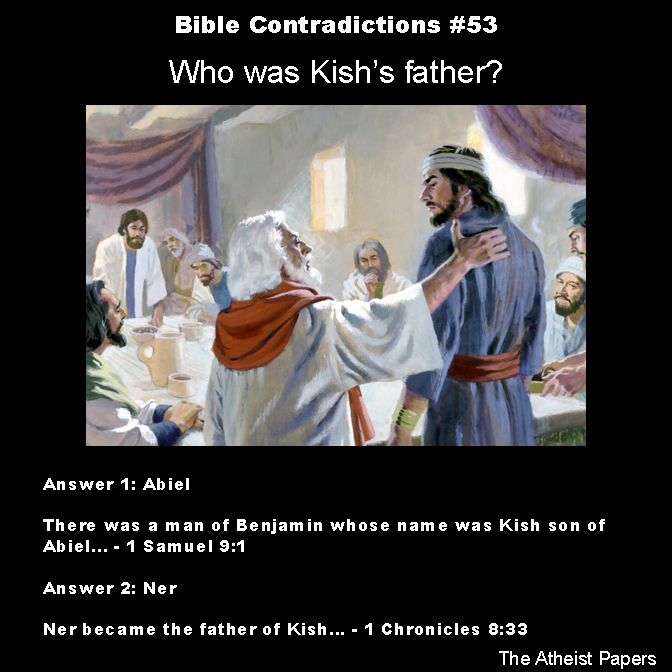
My point is that dogma already has everything figured out (according to the individual dogma). It understands and explains everything. It leaves no room for shifting theories. It disallows analytical eclecticism. The bible (or even better, the ten commandments) is a perfect example of dogma. Of course, religious people are not as dogmatic as their bible. If they were, there would only be one Christian church. Instead, it appears religious people are more swayed by analytical eclecticism than dogma.
Most of us in academia use paradigms and build (or borrow) theoretical frameworks to explain phenomena. We generalize because explanation is more important than understanding. Seeking to understand a phenomenon uses no parsimonious theory, but rather employs complicated linkage systems of events that borders on the quantum. This is good and very useful to historians, but not for research. For example, we are not interested in understanding what caused each individual case of religious terror. Theories are not individual. If they were they would be only retroactive, with no ability to predict the future. Instead we seek the ability to explain why religious terrorism occurs. We seek correlation that can be applied to a wide range of action. Religious people are not against analysis. It appears they, on the other hand, in the practice of their religion, use an analytical eclecticism, parts taken from many philosophical approaches, to understand individual aspects of life and death. This form of analysis is not necessarily a bad thing. Even highly respected academics have proposed focusing less on paradigms and more on analytical eclecticism. (I’m not one of those).
I need to note right here — in order to avoid building a straw man — that many religious people, even in the practice of their religion, use paradigms. Not every religious person employs analytical eclecticism.
The fact that most Christians, for example, reject the idea that the bible is literal underscores the use of analytical eclecticism instead of dogma. Where the bible is not literal, some Christians look to philosophers, clergy, authors, and maybe even scientists to understand a phenomenon. In this case they’ve utilized several sources (the bible included) to understand, for example, the creation of the universe. Even Christians who accept “big bang” cosmology might even see an intelligent hand guiding it. Here, they have borrowed from science, philosophy, and religion to answer their question. (This is not necessarily a bad thing, as long as they don’t insist this is the ultimate truth regarding the cosmos).
Although analytical eclecticism has its merits in individual cases, it’s my hope that people — particularly religious people — will refrain from using it and instead focus on the explanatory power of paradigms. But what do you think? Do my ideas make sense? Are religious people in the practice of their religion more concerned with understanding than explanation? Am I completely wrong? Is analytical eclecticism a better practice than paradigm building? In any case, I will continue to focus on the explanatory power of theory and leave understanding up to historians and people with access to the state’s nuclear arsenal.




 The Atheist Papers